

Reaction to the Babcock hiring – Part 1: The off-ice issues
June 26, 2026NHL UFA contract valuation expectations in the rising cap environment
July 1, 2026Reaction to the Babcock hiring – Part 2: The hockey aspect
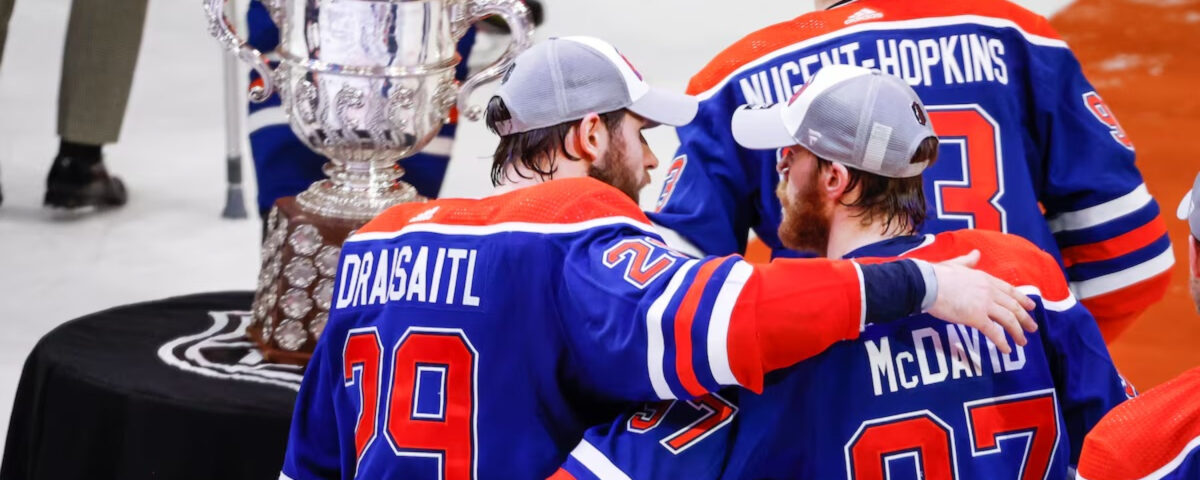
Photo Credit: theglobeandmail.com
June 26, 2026 by Ryan Lotsberg
Babcock has 700 NHL wins, so it isn’t as if he doesn’t know how to coach. It’s been almost seven years since the man has coached an NHL game though. Babcock told Oilers Now host Bob Stauffer that he talked to Anaheim Ducks coach Joel Quenneville, who got the job in Southern California after being away from coaching for several years because of his involvement in the Chicago Blackhawks’ handling of a sexual assault incident in 2010, about his experience of getting back into it. Quenneville was able to get back into the swing of things after a couple of exhibition games.
Related: Reaction to the Babcock hiring – Part 1: The off-ice issues
I imagine being behind the bench during a game is kind of like riding a bike, especially for someone with 1,301 games of NHL coaching experience such as Babcock. I was surprised and disappointed that the Oilers’ choice was to go for a coach that had been retired for so long, but I’m sure he’ll figure the in-game stuff out.
It’s not like he has had his feet up for the last seven years. Babcock has been staying involved in the game by consulting for his son, who was recently hired as the head coach of the Hyman family’s Brampton Bulldogs, during his previous coaching roles. Smith approached Babcock for input after he became the interim head coach of the Los Angeles Kings last season.
One thing that Babcock said during his interview with Stauffer in particular annoyed me:
“If you haven’t won, you don’t know how to win; but once you win, you think you have a formula.”
Since 2010, the Chicago Blackhawks, Los Angeles Kings, Pittsburgh Penguins, Tampa Bay Lightning, and Florida Panthers have won multiple Stanley Cups. The Blackhawks won three in a five year period. The Kings won two in three years. The Penguins, Lightning, and Panthers all won back-to-back championships. There’s something to the idea that winning becomes a little bit easier once you do it the first time.
Those teams and all the teams that only won one Stanley Cup in that time frame were all in contention for many years before winning, and they all stayed competitive for a while after winning because they had strong rosters.
That’s winning in the context of a particular franchise though. We’re talking about a particular coach here. The reality is that only three NHL coaches have ever won Stanley Cups with multiple teams. That’s three coaches in 108 years!
The one thing that all Stanley Cup winning coaches have in common is that they hadn’t won one before they won their first one. If you don’t know how to win until you win, then how does anyone win for the first time? Why don’t we see more coaches repeat the formula with new teams?
The best and longest tenured coach in the league right now is Lightning head coach Jon Cooper. He was hired from the AHL, and he hadn’t won a Stanley Cup before getting the job in Tampa Bay. The same can be said of Colorado Avalanche head coach Jared Bednar, who is the second longest tenured coach in the NHL. The league’s third longest tenured coach, Rod Brind’Amour, just won his first Stanley Cup as a head coach, and this is his first NHL coaching job. Brind’Amour’s circumstance is a little bit different since he captained the Hurricanes to the 2006 Stanley Cup as a player, but the point stands.
I understand that the Oilers just hired and fired two first-time NHL coaches and I understand wanting to do something different. I just don’t agree with the organization having tunnel vision on a Stanley Cup winning coach given the rarity of coaches winning Stanley Cups with multiple teams. I would love to see the Oilers get their own coach that’s able to build something special and win multiple Stanley Cups with this core, but this organization is too impatient to allow that to happen. They prefer to attempt to copy the success of others, as we’ve seen with the many shiny brand name executives the Oilers have hired with zero success under Daryl Katz’s ownership tenure. Babcock is the latest example of that.
Stauffer got into a little bit of surface level tactical discussion with Babcock during their one-on-one interview. Babcock said that the Oilers will “pressure like crazy” defensively. He also said that “the biggest thing to have success in D-zone coverage and D-zone is to have numbers at your line. This is all going to be determined by how we play in the O-zone and how we’re not going to lose people and how we’re going to be fresh coming back in the D-zone.”
He went on to say that he and his coaching staff will conduct studies on which defensive strategies have worked the best in the NHL recently, and then they will analyze the roster and determine where their strengths lie before determining a defensive structure to be followed.
“Pressure like crazy” works for some teams, but not for others. I like that Babcock will analyze the strengths and weaknesses of his players before settling on a system. I don’t know how the Oilers will respond to the system that Babcock puts in place though, only time will tell. I like that Babcock seems to place a premium on preventing rush chances for the opposition by controlling the blue lines well. Puck management at the blue lines and rush defence have been massive problems for the Oilers for multiple seasons. It’s their Achilles heel. Woodcroft and Knoblauch were able to get that issue under control for stretches, but it always reared its ugly head again eventually. We’ll see if Babcock has any better luck than his predecessors did in that regard.
Stauffer asked Babcock about his ideas on the deployment of McDavid and Draisaitl. Babcock talked about maximizing everyone in the group and making sure everyone has a role and feels important. Bowman talked about that in the press conference as well. The goal is to ensure that the bottom of the roster players have more of a role this season.
As much as I agree that McDavid and Draisaitl’s loads need to be lightened, I also feel that the bottom of the roster players aren’t good enough to warrant much more ice time than they got last season. The roster still needs to take shape over the summer, but if the bottom six is going to be entrusted with more ice time and more responsibility, then they need to be better than they were last year. I’m not buying the argument that they weren’t good last year because they didn’t get a chance to be good. Many other players around the league played better with as much or less opportunity. I’m all for defined roles, but I also believe the quality of the bottom of the roster needs to improve.
Speaking of McDavid and Draisaitl, a massive factor in this decision that needs to be talked about is the involvement of the leadership group in the decision-making process. This was not McDavid, Draisaitl, and/or Hyman telling management that they wanted to be in on the process. Babcock said that it was his idea to talk to some of the players because he wanted their full approval of him being the coach. He would not have been interested in the job if the players weren’t interested in having him as the coach, which is respectable.
The messaging from the players was consistent. They all want to be coached, they all want to be pushed, and they all believe that Babcock is the right person to do those things for them. I’m not saying that Babcock can’t do those things. I’m just not convinced that Babcock is the only coach out there that could coach them and push them.
An argument that I’ve seen a lot ever since the news of the Oilers being interested in Babcock broke is that if the players want him, then he’s the right hire. The players might be right, but they might be wrong. Deferring to someone in a position of authority such as a player or a general manager isn’t a strong argument. If this is the stance that fans want to take, then they shouldn’t complain when a coach or a GM does something they don’t agree with because they know best, right?
Regardless of your opinion on the hiring, the players wanted it, so they will have to accept their share of the blame if things don’t work out with Babcock.
I think it’s important to look at Babcock’s most recent body of work in the NHL. The Leafs hired Babcock prior to the 2015-16 season thinking the same thing that the Oilers are thinking right now. They’re getting a Stanley Cup winning coach, which they thought would improve their odds of winning a Stanley Cup.
The Leafs had a 173-133-45 regular season record under Babcock in his five seasons as their coach. They never got past the first round of the playoffs.
It’s not totally fair to look at Babcock’s five-year tenure as a whole because the Leafs were awful when he arrived. They got Auston Matthews prior to Babcock’s second season as head coach, and they added John Tavares for his last two seasons.
According to Natural Stat Trick, the Leafs went from dead last in the league to thirteenth in five-on-five goals for percentage (GF%) in Matthews’ first season. They were 27th in expected goals against (xGA) and 24th in actual goals against (GA) though. Their goal scoring clearly went up, but they weren’t good defensively.
In 2017-18, they climbed to fifth in GF% and fifteenth in GA, but they stayed in fourth worst in xGA. They were seventh in GF%, eighteenth in GA, and 27th in xGA in 2018-19. Finally, they were 22nd in GF%, tied for 28th in GA, and 29th in xGA before the Leafs fired Babcock on November 20, 2019.
From that date onward in the 2019-20 season, the Leafs were thirteenth in GF%, 25th in GA, and sixteenth in xGA. They only saw a marginal improvement in GF% after Babcock was fired, but they improved SIGNIFICANTLY in GF% and xGA.
The Leafs went to third in GF%, eighth in GA, and eleventh in 2020-21, the season after Babcock was fired. The Leafs were never a good defensive team under Babcock. They always ranked near the bottom of the league in xGA. They got better defensively after he left.
The Leafs were a young team under Babcock, but they had a top-heavy forward group with the “Core Four” (Matthews, Tavares, Mitch Marner, and William Nylander). They always had a questionable defensive core that was led by a top-end scoring defenceman that has always been suspect defensively, Morgan Rielly.
That honestly doesn’t sound all that different from how the Oilers are constructed. Their forward group is top-heavy with McDavid and Draisaitl as their superstars and Hyman and Ryan Nugent-Hopkins in supporting roles. Evan Bouchard is better than Rielly ever was, but he fits the description I used for Rielly as well.
I acknowledge that McDavid and Draisaitl are better than anyone the Leafs have ever had, but the idea of both rosters being top-heavy is accurate. The Oilers defence core is better than anything the Leafs had in the Babcock era and have had since, but let’s not pretend we didn’t just spend a whole season complaining about how awful the Oilers’ team defence was, Bouchard’s turnovers, watching Mattias Ekholm’s goals against rate skyrocket, and watching Jake Walman struggle. We can’t pretend that Oilers fans haven’t been complaining about Darnell Nurse for eons and that he didn’t just have his worst season of the 2020s. We also can’t pretend that Oilers fans aren’t celebrating the signing of a shut down defenceman because he offers something the Oilers didn’t have before he arrived.
Related: Murphy extends with the Oilers
I took some heat on X for this comparison online earlier this week, but I stand by it. I said the rosters are “similarly constructed”, not “identically constructed” or “they’re at the same stage of their development arc as teams”. All I was getting at was that the Babcock-era Leafs had a top-heavy forward group like the Oilers do now, and both teams had or have defence cores that aren’t the strongest defensively. That isn’t a ridiculous comparison.
A criticism that I received for this comparison was that the Leafs had awful rosters under Babcock. I spent all of last season suggesting that the Oilers’ struggles had more to do with their poor roster construction than Knoblauch’s coaching, which was another view with which I was in the minority. Knoblauch’s coaching got a ton of blame for the team’s results last season, but Babcock gets a break because his Leafs rosters were poor. It seems like the coach is only the most important factor when people want that to be the narrative.
For the sake of being consistent with my own arguments, let’s say that Babcock’s Leafs teams were all awful. He clearly didn’t have success with the Leafs. The team that Babcock won his Stanley Cup with had a loaded roster. He won his international tournaments with loaded rosters as well. How much of his teams’ successes and failures were truly a result of him and his coaching? It’s hard to say.
If you believe that the coach has the most influence on a team’s success, then Babcock’s body of work with the Leafs suggests that his defensive strategies lost effectiveness as goal scoring went up in the league (it rose from 2.68 goals per game to 2.98 goals per game from 2015-16 through 2019-20). He wasn’t able to take a team that struggled defensively and make them more stout.
The Oilers were 20th in GF%, 27th in GA, and sixteenth in xGA last season. The Oilers are clearly not a fantastic defensive team. Goal scoring has risen even further since Babcock last coached, and it has risen by 0.36 goals per game since he won his Stanley Cup in 2008. The game is different than when Babcock last coached, and it’s quite different from when he won his Stanley Cup. I don’t think his past success and tales about his “hard ass” coaching style are evidence that he will have success as a coach today. I don’t see how Babcock’s most recent coaching results suggest that he will turn the Oilers into a strong defensive team again.
If you believe that the roster has the most influence on the team’s success, then roster quality will dictate the outcome for the Oilers under Babcock. I need to see how the summer unfolds before I pass judgment on the roster quality that Babcock will have at his disposal, but unless we see some significant changes, I’m not convinced the 2026-27 roster will be much better than last season’s team. They will be better based on having more rest leading into the season, but I’m not sure just how much of an impact that will have if the roster doesn’t improve.
Nobody can predict the future. We won’t know if hiring Babcock was the right decision until his tenure ends. For now, everyone is allowed to have their opinion and mine is that this is not the coach that I would’ve chosen. It probably isn’t as bad of a decision as my initial reaction made it seem like, but I’m not convinced that Babcock will be more effective than a coach that didn’t come with the circus that preceded his hiring.

1 Comment
[…] Related: Reaction to the Babcock hiring – Part 2: The hockey aspect […]